
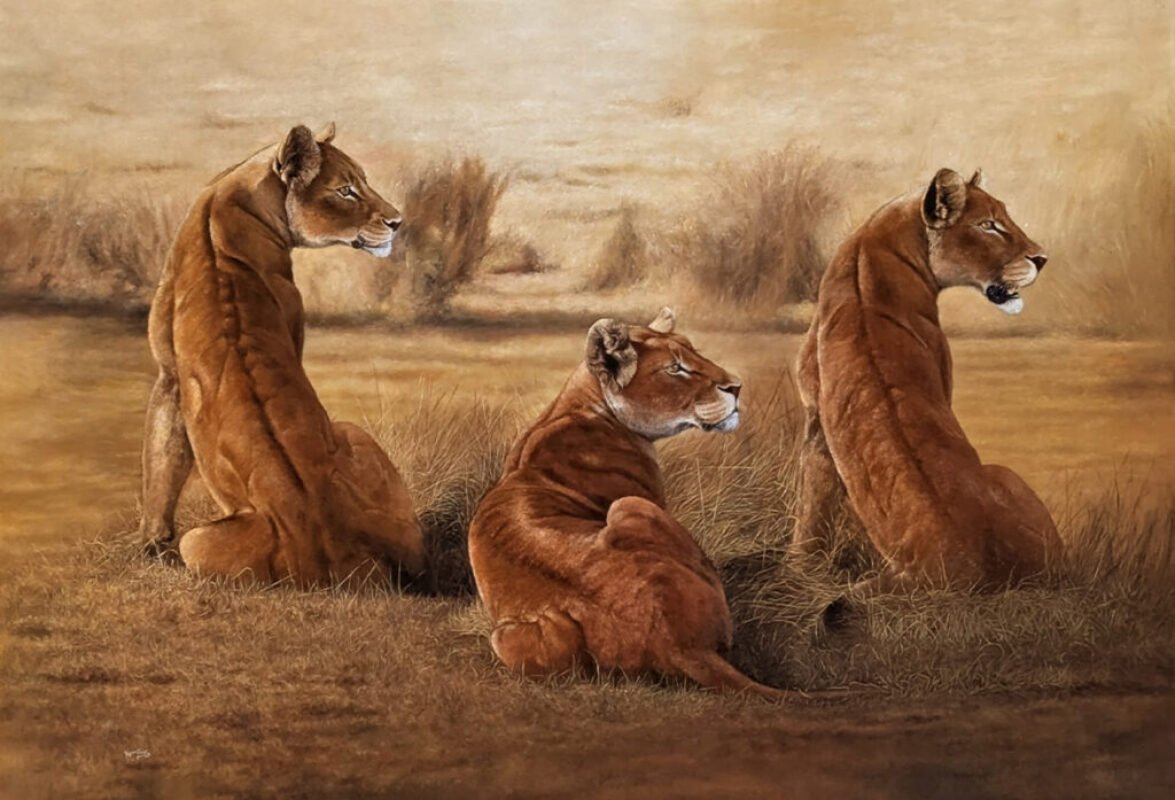

Artwork
Savanna Sentinels

Medium
Oil on Canvas

Style
Fine Art Realism

Dimensions
100 cm × 150 cm

Value
$4,500 USD
Tsessebe antelopes live in the sweeping open savannas, expansive grasslands, seasonal floodplains, and lightly wooded edaphic plains of sub-Saharan Africa. Their true heartland spans across the sun-drenched countries of Botswana, Zimbabwe, and Zambia, while thriving populations also stretch down into South Africa, Namibia, and parts of Angola. They avoid dense forests and thick bushveld entirely, preferring wide-open vistas where their extraordinary eyesight and blistering velocity are their greatest shields against danger. By examining where they live, we gain a deeper appreciation for how this unique species thrives within specialized terrestrial ecological niches across Southern Africa.
1. Prime Habitats and Open Savannas
Unlike more adaptable or generalist grazers, Tssessebe antelopes are highly selective about their surroundings. They depend heavily on vast grass plains that allow them to detect approaching predators, such as lions, cheetahs, and spotted hyenas, from substantial distances.
The primary natural landscapes include:
-
Seasonal Floodplains: Moist grasslands surrounding river systems, such as the Okavango Delta in Botswana, which provide rich nutrients during dry months.
-
Open Wooded Plains: Lightly timbered areas with minimal underbrush, allowing unobstructed movement and clear visibility.
-
Edaphic Grasslands: Soils that remain seasonally waterlogged, preventing dense tree growth and fostering vast fields of perennial grass species.
Because they require reliable access to water, regions where they are almost always within a short distance of perennial streams, rivers, or waterholes. They typically drink water daily, making hyper-arid deserts or dry dense brush unsuitable for their survival.
4. Eccentric Behaviors and Puzzling Rituals
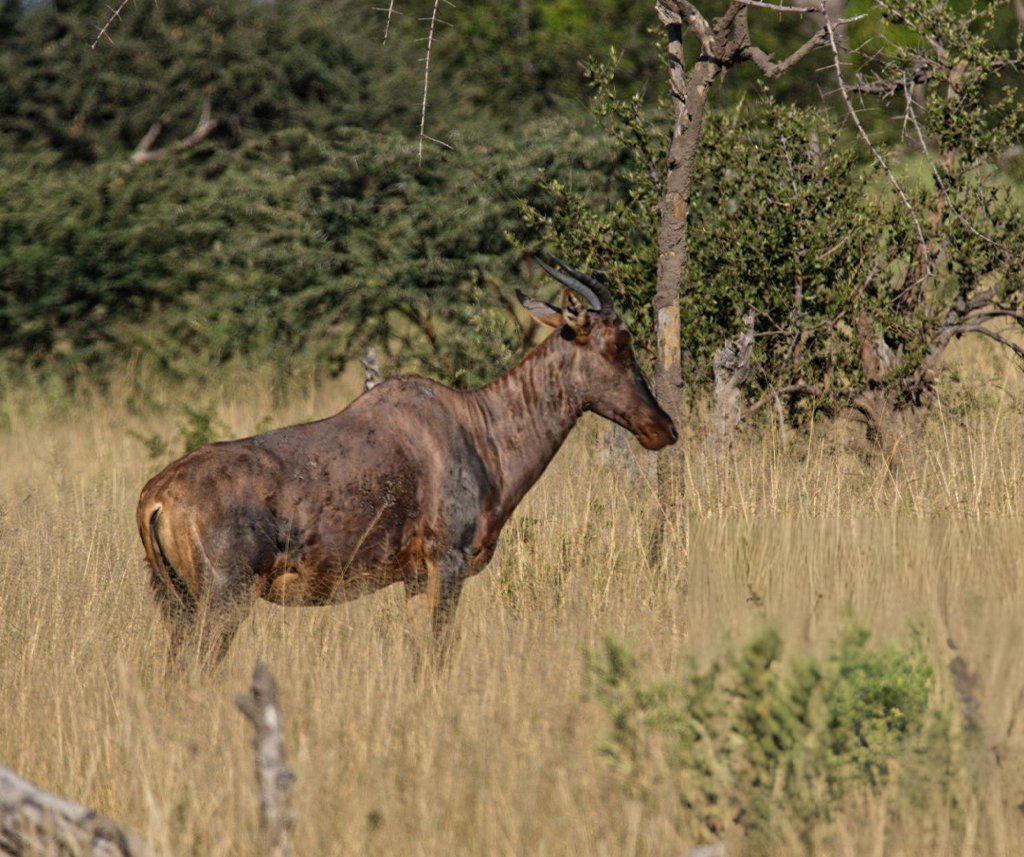
Yet, beyond their impressive athleticism and territorial displays, they possess some of the most eccentric and puzzling habits in the animal kingdom. Researchers and wildlife trackers have often been left scratching their heads at the peculiar sight of resting tsessebe pressing their mouths flat against the bare earth while keeping their sharp horns pointing rigidly toward the sky. This behavior, sometimes referred to as face-pressing or earth-nosing, remains one of the most enigmatic sights on the African veld.
In other bizarre displays, adult males will stand shoulder-to-shoulder in perfectly straight parallel ranks with their eyes tightly closed, rhythmically bobbing their heads back and forth like clockwork. While science has yet to fully decode the exact purpose behind these mysterious rituals, theories range from scent-marking synchronization and parasite deterrence to complex social hierarchy calibration. Whatever their true function, they add an extra layer of wonder to an already fascinating species.
5. Peaceful Coexistence in the Savanna Ecosystem
As twilight descends upon the African savanna, casting long golden shadows across the floodplains, the tsessebe settles into the quiet rhythms of the night. They share these ancient lands peacefully with other iconic grazers like zebras and wildebeests, each species quietly carving out its own niche without direct conflict. Because tsessebe prefer short to medium grasses and target specific tender shoots, they avoid competing directly with tall-grass feeders like buffaloes.
From the sprawling delta networks of Botswana to the protected expanses of South Africa’s national parks, the tsessebe remains an enduring symbol of wild grace and untamed freedom. They are the wind-swept spirits of the grassland, a breathtaking reminder of the raw, beautiful energy that still pulses through the heart of the African wilderness. Protecting these open plains ensures that these remarkable, high-speed grazers will continue to stride across the African continent for generations to come.